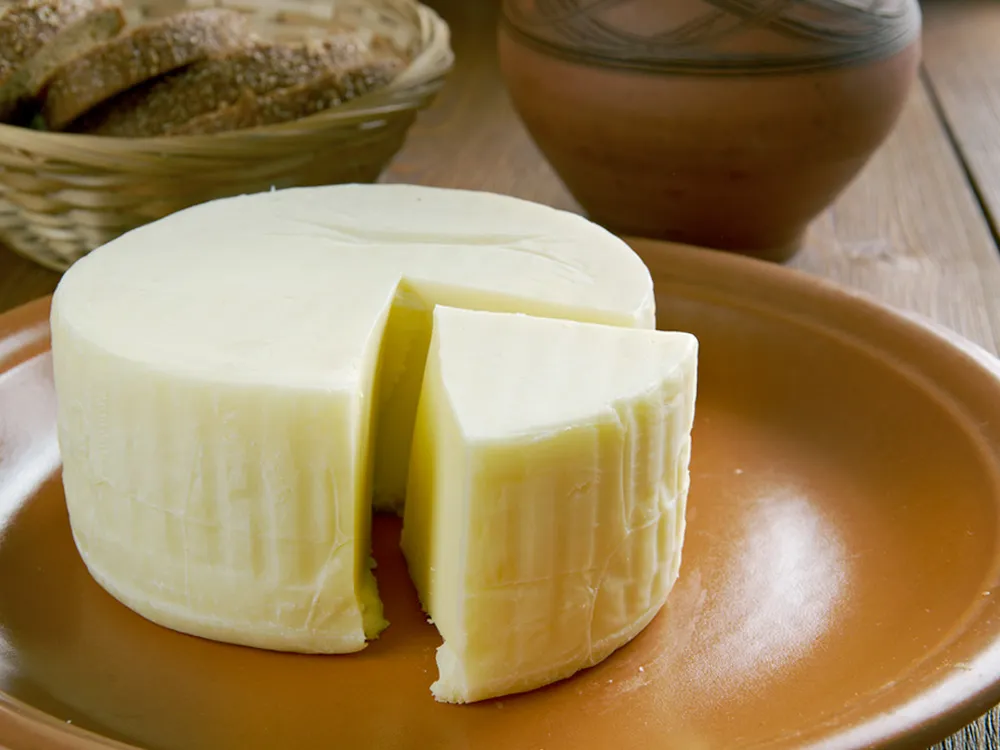
Basket Cheese
Basket cheese is a unique type of cheese that originated in Italy but is now popular in several other countries, including the United States. It is a fresh cheese known for its delicate texture and slightly tangy flavor. An Arabic-style semi-soft cheese made from vegetable rennet and pasteurized cow milk, it gets its name from the process of molding the cheese in elegant wicker-textured baskets. Known also as "scamorza" in Italy, basket cheese is traditionally made by hanging the curds in a basket to drain. The cheese usually arrives in circular form, with each round weighing approximately 12-18 oz. This artisanal process not only contributes to the cheese's distinctive appearance but also enhances its flavor profile. The slight smokiness from the hanging process adds depth to the cheese, making it a standout ingredient in various culinary creations. Indeed, thanks to its superb taste it is one of the top three Middle Eastern kinds of cheese sold in the United States. Each basket mold is hand-crafted, making it difficult to mass-produce the cheese. In this article, we will explore what basket cheese is, its various uses, its taste profile, shelf life, ingredients, nutritional value, and whether it is a healthy option for cheese lovers. One of the primary uses of basket cheese is in Italian cuisine, specifically in dessert dishes.The soft and creamy texture of basket cheese makes it an excellent ingredient to use in a variety of cheesecakes, cannoli fillings, and other sweet treats. Its mild flavor does not overpower other ingredients, allowing them to shine in recipes. Basket cheese's versatility extends beyond desserts, and it can also be used in savory dishes such as pasta, salads, and sandwiches. It tastes incredible with tomatoes, basil, pita bread, and water wheel crackers. Some people prefer to relish the taste by eating it along with jam or honey at breakfast. Since the cheese doesn’t melt away easily, many Indian cuisines use it as a replacement for paneer. The old-fashioned fruit and cheese platter also works wonders with Basket cheese. But remember to use it within six months of refrigerated life. Or else it can simply find itself crumbled over a fresh salad, melted into a gooey grilled cheese, or used atop a savory pastry. Its ability to complement a wide range of ingredients makes basket cheese a popular choice in both sweet and savory dishes. Due to its fresh and delicate nature, basket cheese is best enjoyed soon after it is made. Its creamy consistency and subtle tanginess make it a delightful addition to antipasto platters, where it can be paired with fruits, nuts, and cured meats. In Italian households, basket cheese is often served during special occasions and celebrations, symbolizing good luck and prosperity. This rich cultural significance, along with its culinary versatility, has solidified basket cheese's place as a beloved ingredient in both traditional and modern Italian cooking. When it comes to taste, basket cheese has a mild and slightly tangy flavor.The tanginess is subtle, adding a touch of freshness to the overall taste profile. This delicate flavor makes it a versatile cheese that can be paired with both sweet and savory ingredients without overpowering them. The mildness of the cheese allows the flavors of other ingredients to come through, creating a harmonious balance in any dish it is used in. One of the unique aspects of basket cheese is its texture. It has a soft and slightly crumbly texture that melts in your mouth, providing a creamy and rich experience. This texture adds a delightful contrast to dishes, whether it's sprinkled over a salad or melted into a gooey grilled cheese sandwich. The creamy consistency of basket cheese also makes it a perfect choice for spreading on crackers or crusty bread, creating a simple yet satisfying snack. Additionally, basket cheese is often enjoyed in traditional Mediterranean cuisine, where it is used in dishes like spanakopita (a spinach pie) or as a filling for pastries. Its mild flavor and creamy texture complement the bold flavors of herbs and spices commonly found in these dishes, enhancing the overall taste experience. Whether enjoyed on its own or as part of a recipe, basket cheese is a versatile and delicious option for cheese lovers looking to explore new flavors. Due to its fresh nature, basket cheese has a shorter shelf life compared to aged cheeses.When stored properly in the refrigerator, basket cheese can last up to two weeks. It is essential to keep the cheese in a well-sealed container or wrapped tightly in plastic wrap to prevent moisture loss and maintain its texture. It is best to consume basket cheese within a week of purchase for optimal freshness. Basket cheese is traditionally made from cow's milk or a mixture of cow's and sheep's milk, depending on the region and recipe.The cheese is made using a simple and ancient method. The curd of the cheese is formed by adding an acid, such as vinegar or lemon juice, to warm milk. This causes the milk to curdle, and the curds are then separated from the whey. Basket cheese gets its name from the traditional method of molding the cheese in a basket, allowing the whey to drain. This results in the cheese retaining its shape and developing a distinct texture. When it comes to nutritional value, basket cheese is a healthier option compared to many other types of cheese.It is lower in fat and calories, making it a suitable choice for those watching their intake. Additionally, basket cheese is a good source of protein and calcium, essential nutrients for a balanced diet. A 1-ounce (28g) serving of basket cheese typically contains around 90 calories, seven grams of fat, five grams of protein, and 160 milligrams of calcium. However, it is important to note that the specific nutritional content can vary depending on the brand and preparation method. It is always advisable to check the label or consult with the manufacturer for precise information. In terms of calories, basket cheese typically contains around 90 calories per ounce.It is also relatively low in fat, with approximately seven grams per ounce. The cheese is a good source of protein, providing about five grams per ounce. It also contains calcium, essential for bone health, with around 160 milligrams per ounce. These nutritional values may vary slightly depending on the specific brand and production methods, so it's always a good idea to refer to the product's packaging or consult the manufacturer for accurate information. Conclusion: Basket cheese is a unique and versatile cheese loved for its delicate texture and mild tangy flavor. It is commonly used in both sweet and savory dishes, adding a creamy touch to desserts like cheesecakes and cannoli fillings, as well as enhancing the flavors in pasta, salads, and sandwiches. People of all ages can enjoy basket cheese as part of a balanced diet. While it has a shorter shelf life compared to aged cheeses, proper storage ensures its freshness for up to two weeks. So, next time you're looking for a slice of fresh and versatile cheese, consider trying basket cheese in your favorite recipes!
Caracteristiques
- Famille
- Pâte pressée non cuite
- Type de lait
- Vache