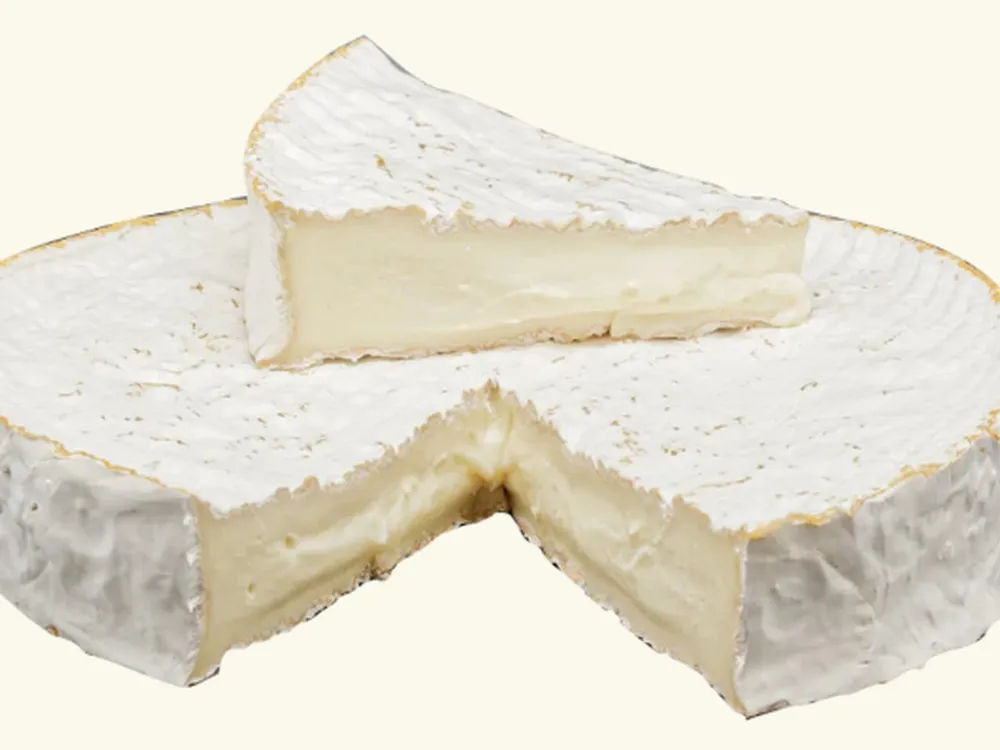
Brie
Brie is a soft and creamy cheese known for its mild, buttery flavor. It is traditionally made from cow's milk and aged as large wheels or rounds.Characterized by its pale yellow interior, its soft, creamy texture under the rind compliments its firmer consistency in the center. There are various types of Brie, including traditional Brie de Meaux and Brie de Melun, which are PDO (protected designations of origin) in France. Additionally, many countries produce their own versions of Brie, which can vary in taste and texture. Brie can be used in both savory and sweet dishes. It's often served as anappetizer, sliced, and served with bread, crackers, or fruit. Brie goes well with white wines likeChardonnay,Sauvignon BlancandChampagne. Thanks to Brie’s versatility and mild flavor, there is no wrong way to eat it. One important fact to take into account is that it should be brought toroom temperature before consumption.Removing the cheese from the refrigerator and allowing it to sit out for at least 30 minutes before serving allows it to relax into a soft and spreadable form. Caution should be taken; do not leave the cheese at this temperature for too long. Brie’s high moisture content encourages the growth of bacteria, so it shouldn’t be left outside the refrigerator for more than two hours. Brie cheese hails from the historic region of Brie in France, located in the Île-de-France region only a few kilometers outside Paris.Known as the Queen’s cheese for much of its history, artisans began producing it in the town of Meaux sometime during the 8th century. Post-revolution, the cheese became popularized as the Queen of Cheeses, a subtle – yet important – distinction that reflected the political climate of the time. Today, Brie remains an integral part of French culinary tradition, and versions of the cheese exist in countries worldwide. Brie has a slightly nutty flavor that becomes more pronounced with age. The outer layer is firm, but the inner part is gooey and luscious. Its white, edible rind is made from a mold sprayed on early in the production. This mold -Penicillium candidum - forms a white rind that contributes to the cheese's overall flavor and significantly alters its texture.Brie is used in both savory and sweet dishes. Traditionally, it is served as an appetizer, sliced and spread across crusty bread, or put on crackers and eaten with fruit. It goes well with white wines like Chardonnay, Sauvignon Blanc, and Champagne. Brie comes in many varieties, with popular choices such as the traditional Brie de Meaux and Brie de Melun benefiting from the PDO (protected designations of origin) label in France. Additionally, many countries produce versions of Brie that vary in taste and texture. Once the brie cheese has reached the desired temperature (it’s important to let it sit at room temperature for at least 30 minutes before serving), you can place it on a serving platter or a cheese board. The rind is edible, delicious, and part of the overall taste experience. Still, some people prefer to remove it so they can focus their attention entirely on the gooey cheese underneath. If you choose to remove the rind, lay the cheese flat on a chopping board and slice off the sides using a sharp, serrated knife, carefully pulling the rind away as you cut. Adding a savory element to a cheese board is a great option for those who want to take the experience to the next level. A selection of cured meats like prosciutto or salami or a scattering of olives and roasted nuts helps to focus the pallet as the saltiness of the meats and the astringent brine of the olives blend with the rich creaminess of the brie.Pairing optionsabound. A crisp white wine such as Chardonnay or Sauvignon Blanc offers a refreshing contrast to the cheese's richness. Meanwhile, if you prefer beer, something light and effervescent, such as a Belgian Witbier or a sparkling cider, can also help cleanse the palate between bites of brie. As noted, brie works well with various accompaniments, allowing to balance the cheese's creamy and somewhat tangy flavors while also offering contrasting textures. Here are some ideas for what to serve with Brie: Brie cheese is famous for its creamy texture, which carries a subtle, earthy, buttery undertone. The taste varies dramatically depending on the ripeness of the cheese, with theyounger Brie offering a firmer and milder flavorprofilerin contrast to the more mature Brie, which becomes ever more pungent as it ages.The rind adds a subtle mushroom-like taste that contrasts nicely with the smooth and velvety texture of the cheeseencased within as it melts in your mouth. Like other types of cheese, Brie is a good source ofcalciumandprotein. It also containsvitaminsA and B12 and essentialmineralssuch as phosphorus and zinc. However, brie must be consumed in moderation due to itshigh-fatcontent andcaloriedensity.Portion sizes should be monitored, and you should always incorporate other nutrient-dense foods into your meal plans. The calorie content of brie cheese can vary depending on the brand and serving size.On average, a one-ounce (28 grams) serving contains approximately 95 calories. Remember that the calorie content can add up quickly if you consume larger portions or pair the cheese with other high-calorie accompaniments. Reading the nutrition label on the packaging for accurate calorie information specific to the brie cheese you are consuming is always a good idea. Aside from its calorie content, brie cheese offers various nutritional benefits. Here is a breakdown of the approximate dietary values for a one-ounce (28 grams) serving of brie cheese: These values can vary slightly depending on the brand and the specific brie cheese you choose. The word "brie" is pronounced as"bree," /briː/The French pronunciation accurately captures the soft and gentle sound associated with this delectable cheese. As you might expect, making brie is a long and involved process that requires skill and expertise. It begins with heating fresh cow's milk, combined with a starter culture and rennet. This mixture causes the milk to thicken, and as curds form, they are cut, drained, and placed into molds.The curds are then left to set, and the cheese is salted and sprayed with a ‘good’ mold before being removed from the molds and placed in a controlled environment to age. During the aging process, the cheese develops its characteristic bloomy rind.As it ages, the cheese develops a creamy and luxurious texture while its flavors intensify into complexity. Brie cheese is a versatile and delicious cheese that promises a delightful sensory experience with every bite. It can be enjoyed on its own or paired with various accompaniments to create a delightful sensory experience. Whether you choose to serve it on a cheese board or incorporate it into your favorite dishes, brie cheese is sure to impress with its rich and velvety qualities. So, next time you encounter this iconic French delicacy, remember to savor its taste and appreciate the craftsmanship that goes into creating this delectable cheese.
Caracteristiques
- Famille
- Pâte molle à croûte fleurie
- Type de lait
- Vache
- Matiere grasse
- 4.8g
Valeurs nutritionnelles (pour 100g)
- Calories
- 356 kcal
- Proteines
- 17 g
- Lipides
- 32 g