Casu Marzu
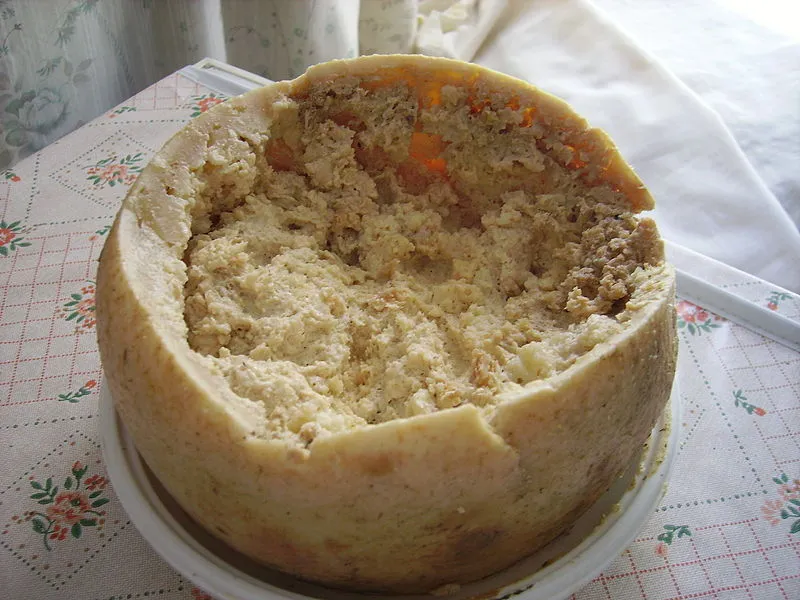
Casu Marzu cheese, also known as "maggot cheese," is a unique and controversial traditional cheese from the island of Sardinia, Italy.This distinctive cheese is renowned for its distinctive production method and its unusual ingredient: live insect larvae.The cheese is made exclusively in Sardinia Island from sheep's milk.Although Casu Marzu is not legally available for sale in many countries, it continues to be consumed by adventurous eaters seeking a truly unforgettable culinary experience.Different versions of this cheese exist in Corsica, France, where it is called Casgiu merzu. Despite its unappealing appearance and unconventional ingredients, Casu Marzu boasts a complex and intense flavor profile that is both creamy and pungent. Casu marzu is a cheese like no other, created by introducing live insect larvae into sheep's milk cheese. These larvae consume the cheese, promoting fermentation. This fermentation is a critical factor in breaking down the fats in the cheese, resulting in a soft, creamy texture that variesfrom smooth and spreadable to semi-liquid, thanks to the activity of the grubs that live inside it. When consumed, the tiny larvae add a layer of flavor reminiscent of Gorgonzola or blue cheese, overpowering for some but a culinary delight for others. Casu Marzu, also known as "maggot cheese," originates from Sardinia, Italy, where it holds a special place in the hearts of adventurous food enthusiasts. The traditional method of making this cheese involves leaving Pecorino cheese outdoors to allow cheese flies to lay their eggs inside. The hatched larvae then digest the cheese, creating a unique fermentation process that gives Casu Marzu its distinctive taste. This process is not just a culinary technique; it's a cultural tradition that connects the people of Sardinia to their past. When you take a bite of Casu Marzu, you may experience a burst of flavors that dance on your taste buds. The initial creaminess of the cheese is quickly followed by a sharp and tangy kick that lingers in your mouth. Some describe the taste as earthy and nutty, with a hint of sweetness that balances out the intense flavors. It's a cheese that demands attention, challenging your palate with its bold and unforgettable taste. Casu Marzu has certainly gained notoriety for its unique production process. As soon as it becomes infested with live insect larvae –specifically the larvae of the cheese fly Piophila casei – . they begin to digest the fats in the cheese, breaking it down and imparting a distinctive flavor profile. The presence of maggots in Casu Marzu, however, is not just a quirky addition; it is an integral part of the cheese's maturation process. As the larvae consume the cheese, they create small cavities and promote fermentation, resulting in a soft and creamy texture with an intense aroma. While the idea of consuming a cheese filled with maggots may seem off-putting to some, fans of Casu Marzu appreciate its complex flavors and consider it a true delicacy. The cheese is often enjoyed spread on bread or paired with a robust red wine that complements its intense taste. Traditionally, the cheese is enjoyed with the larvae still alive, a practice that holds cultural significance in Sardinia. However, due to health concerns, it is prohibited for sale in many countries. Sardinian aficionados consider casu marzu to be unsafe to eat once the maggots in the cheese have perished. One cannot discuss Casu Marzu without mentioning its distinctive aroma. The cheese emits a highly pungent and overpowering smell that some might describe as intensely earthy.The scent is often compared to the strong-smelling blue cheese varieties but with an added hint of ammonia due to the presence of the larvae. When you bring Casu Marzu close to your nose, the first thing that hits you is the sharp tang of fermentation. The cheese's aroma can be polarizing, with some finding it repulsive and others intriguing. The ammonia-like undertones come from the digestive enzymes of the live insect larvae that infest the cheese, breaking down proteins and fats to create a unique olfactory experience. As the cheese ages and the grubs continue to burrow and feed, the smell intensifies, reaching its peak potency. This intense aroma is a result of the complex biochemical processes happening within the cheese, transforming it into a delicacy that challenges the senses. Casu Marzu's smell is not just a byproduct of decay but a testament to the rich tradition and culinary artistry that goes into creating this controversial yet revered cheese. The presence of maggots in Casu Marzu is not an accident or a sign of contamination. In fact, these insects, known as cheese skippers or Piophila casei, play a crucial role in the production process. Once the cheese has reached a certain level of maturity, it is deliberately infested with maggots. The live larvae burrow into the cheese, consuming and breaking down its fats. As a result, a fermentation process occurs, altering the texture and amplifying the flavor of the cheese. Despite the potential disgust associated with consuming live maggots, Casu Marzu has a strong cultural significance and continues to be consumed in Sardinia.For locals, it represents a connection to their ancestral traditions and a testament to their resourcefulness. But beyond its cultural importance, the cheese's genuinely unique taste and texture also attract those seeking an extraordinary gastronomic experience, as it is considered one of the most challenging and fascinating cheeses in the world. It is important to note that consuming Casu Marzu comes with certain risks. Due to the presence of live insects, eating this cheese can pose health hazards. The larvae can jump up to 15 centimeters, which can be alarming and potentially cause harm to the eyes. Additionally, the cheese is known to host a variety of bacteria that may cause food poisoning. Consequently, health authorities in many countries have banned the sale and distribution of Casu Marzu to protect consumers. Casu Marzu is exclusively produced on the island of Sardinia, Italy. Although the cheese may be challenging to find outside the region, it remains an integral part of Sardinia's culinary heritage. It is prepared mainly by local shepherds and artisanal cheese makers who adhere to the traditional methods passed down through generations. Casu Marzu cheese is an unparalleled delicacy that both astonishes and polarizes those who encounter it. With its unique taste, pungent aroma, and the presence of wriggling larvae, it has become a cheese that sparks curiosity and debate among food enthusiasts. This debate and curiosity are a testament to the diverse and intriguing world of gastronomy, where Casu Marzu holds a unique and fascinating place.
Caracteristiques
- Famille
- Pâte persillée
- Type de lait
- Brebis