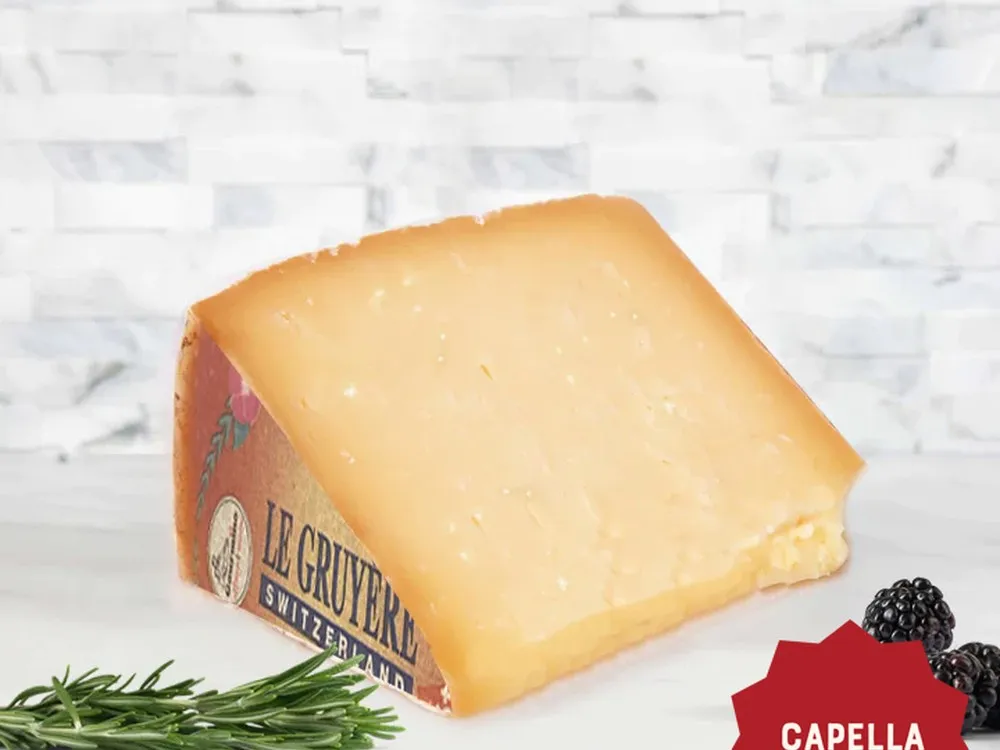
Gruyère
Gruyere cheese is a popular and versatile semi-hard cheese from Switzerland (cantons of Fribourg, Vaud, Neuchâtel, Jura, and Berne), and is named after the town of Gruyère, in Fribourg. Gruyère AOPis made from raw cow's milk, and aged for 3 to 10 months.Cherished for its creamy texture and nutty flavor, it’s known for its culinary excellence, as Gruyère is ideal for baking. Due to its melting properties, it is commonly used in fondues and French onion soup. It is also often grated over salads and pasta. The cheese pairs well with white wines like Riesling. The term "gruyere" can label cheeses outside the Gruyère regions of Switzerland and France. This applies globally, including the US, Netherlands, Germany, and Austria, though the FDA mandates "small holes" and a minimum 90-day aging period for cheeses labeled as "Gruyere". While recognized as a Swiss Geographical Indication, French Gruyère holds PGI status in the EU. To avoid confusion, it's sold as "French Gruyère" and features holes ranging from pea to cherry size. The cheese gained AOC status in 2013. While recognized as a Swiss Geographical Indication, French Gruyère holds PGI status in the EU. To avoid confusion, it's sold as "French Gruyère" and features holes ranging from pea to cherry size. Gruyere is a cow's milk cheese made from the unpasteurized milk of cattle that graze on the lush pastures of the Gruyere region in Switzerland.The cheese is aged anywhere from 5 to 12 months, during which time it develops its distinctive flavor and texture. Gruyere is known for its firm interior, which becomes more supple and slightly crumbly with age. Its taste evolves from sweet and slightly salty when young to more assertive, earthy, and complex as it matures; as it ages, small cracks and irregularly shaped "eyes" (holes) also form. One key factor contributing to Gruyere cheese's unique flavor is its traditional production method, which has been passed down through generations. This distinctive cheese-making process involves skilled artisans who carefully craft each wheel of cheese with precision and expertise. The aging process occurs in special caves or cellars, where the cheese is carefully monitored and turned regularly to ensure even maturation. When it comes to culinary uses, Gruyere cheese is a versatile ingredient that is often enjoyed in various ways. Its flavor profile laced with hazelnut and sweetness makes it a popular choice for melting in fondue or gratins. Gruyere also pairs well with fruits such as apples and pears and cured meats like prosciutto. Whether grated over pasta or enjoyed on a platter, Gruyere is a beloved cheese that adds depth and richness to any dish. Gruyere originates from the Swiss cantons of Fribourg, Vaud, Neuchâtel, Jura, and Berne and takes its name from Gruyère in Fribourg.This region –located in the western part of the country – is famous for its picturesque landscapes and rich dairy heritage. Gruyere is deeply ingrained in Swiss cuisine and has a long-standing tradition dating back to the 12th century. It is protected by the Swiss AOC (Appellation d'Origine Contrôlée) label, which ensures that only cheese made within the region that complies with strict guidelines can bear the name Gruyere. The minimum five-month maturation period produces a firm and flavorful cheese; this flavor intensifies in cheeses selected for even more extended aging periods. The cheese’s cow's milk origin gives it a pale yellow color and a slightly grainy texture that complements its complex flavor profile regardless of how long it is aged. Visitors to the Gruyere region can explore traditional cheese-making farms and witness the artisanal process of Gruyere cheese production that has been passed down through generations. The cheese-making process involves skilled artisans who carefully craft each wheel of cheese with precision and expertise. Additionally, the aging process takes place in special caves or cellars where the cheese is carefully monitored and turned regularly to ensure even maturation. Such visits highlight how the region's rolling hills and lush pastures provide the perfect environment for dairy cows to graze and produce the kind of high-quality milk essential for crafting world-class cheese. Naturally, local restaurants and markets capitalize on the cheese’s fame and offer a wide selection of Gruyere cheese, allowing visitors to indulge in the authentic flavors of this Swiss culinary treasure. Yes, Gruyere is possibly the most renowned Swiss cheese and is often referred to as the "king of cheeses" in Switzerland. Gruyere exemplifies the craftsmanship and expertise of Swiss cheesemakers, and its distinct flavor has made it a local and international staple. However, it is important to note that not all Swiss cheeses are Gruyere cheese. Switzerland boasts a variety of other delicious cheeses such asEmmental,Appenzeller, andRaclette. Gruyere is pronounced as "groo-yair" or “groo-yehr” (ɡruːˈjɛər/).The "u" is articulated like the "oo" in "food," and the emphasis is placed on the second syllable. The correct pronunciation of Gruyere can be tricky but is worth mastering as such knowledge will impress your fellow cheese lovers and enhance your overall culinary knowledge. Gruyere cheese boasts a complex flavor profile that combines nuttiness with a hint of fruit and subtle yet noticeable sweetness.It also possesses a rich and creamy texture that melts beautifully when heated, making it a perfect choice for fondues and gratins. Age, however, significantly impacts its overall flavor profile. Younger Gruyere tends to be milder and sweeter, while aged Gruyere develops a more robust and nutty flavor. Its distinctiveness sets it apart from other Swiss cheeses and makes it a favorite among cheese connoisseurs. Gruyere cheese's versatility makes it an excellent addition to various dishes. Its remarkable melting capabilities make it perfect for grilled cheese sandwiches and cheesy pasta dishes such as macaroni and cheese.It can also elevate classic dishes like quiches, gratins, and potato au gratin. Additionally, Gruyere cheese pairs wonderfully with fruits, bread, and even chocolate. The possibilities are endless, so let your creativity run wild when incorporating Gruyere into your culinary repertoire. While Gruyere cheese undoubtedly adds a unique flavor and texture to dishes, several alternatives can be used in its absence. Here are some of the best substitutes for Gruyere cheese: Now that you're armed with knowledge about Gruyere cheese and its substitutes, you can confidently explore the world of Swiss cheese and discover new culinary delights. Whether you're using Gruyere itself or one of its alternatives, these cheeses are sure to elevate your dishes and satisfy your cheese cravings. Enjoy the journey of experimenting with different flavors and textures, and savor the delectable results!
Caracteristiques
- Famille
- Pâte pressée cuite
- Type de lait
- Vache