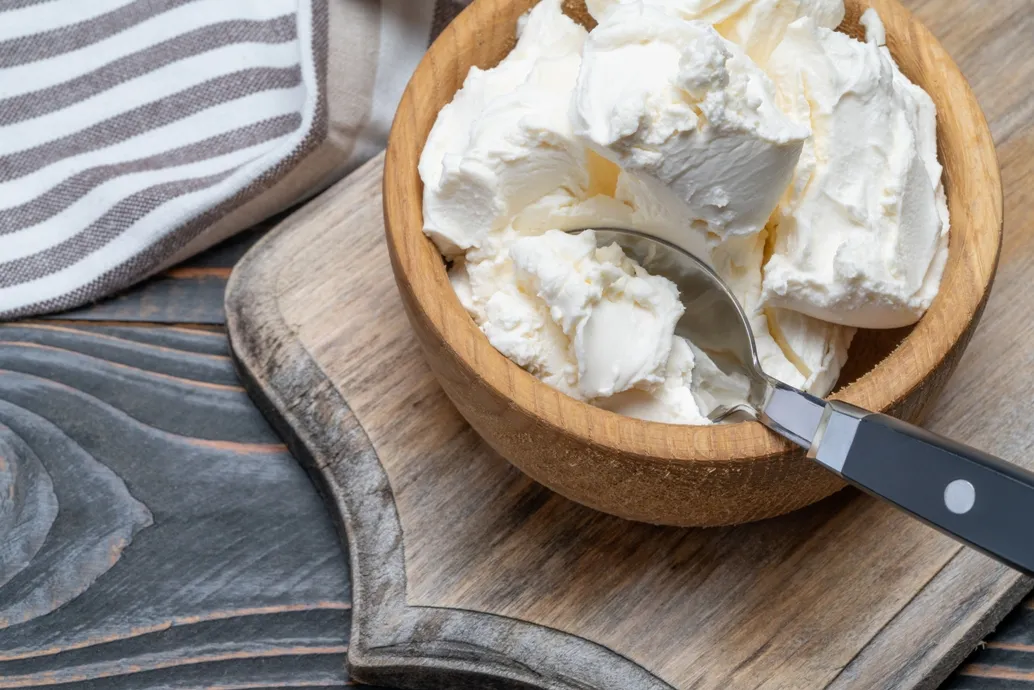
Mascarpone
Mascarpone cheese is a creamy and indulgent Italian cheese that is often used in both sweet and savory dishes.It's made from the cream of cow's milk and has a high-fat content, giving it a rich and velvety texture. What sets mascarpone cheese is its delicate flavor profile that is both mild and slightly sweet. It's often compared to cream cheese or ricotta, but it has a distinct taste of its own. This unique taste is what makes mascarpone cheese a must-try for any food enthusiast. Mascarpone originated in the Lombardy region of Northern Italy and the name is derived from the Lombard word 'mascarpa,' which means 'quark' in English. One of the defining characteristics of mascarpone cheese is its creamy and smooth texture.It has a luxurious mouthfeel that melts in your mouth, making it perfect for desserts like tiramisu. In terms of taste, mascarpone cheese is mild and slightly sweet. It has a delicate and subtle flavor that is not overpowering. Unlike some other cheeses, it does not have a sharp or tangy taste as it is a triple-cream cheese made from whole cow's milk. Mascarpone’s velvety texture and mild flavor lend itself well to desserts such as Tiramisu and Cannoli cream, and it is also employed in savory dishes. When eaten on its own, mascarpone is often enjoyed spread on crackers or bread, where its silky texture and mild flavor shine through. Originating from the Lombardy region of Italy, mascarpone has a rich history dating back to the 16th century. Traditionally made from the cream of cow's milk, mascarpone is a versatile ingredient used in both Italian and international cuisines. Its velvety texture and subtle sweetness have made it a favorite among chefs and home cooks alike. Due to its high-fat content, mascarpone cheese is known for its luxurious mouthfeel and ability to enhance the flavors of dishes it is incorporated into. Whether used in desserts like cheesecakes and pastries or savory dishes like pasta sauces and risotto, mascarpone adds a creamy richness that elevates the overall taste experience. Mascarpone is perishable and should be refrigerated and used within a few days of opening. Mascarpone cheese is a versatile ingredient that is used in a wide range of dishes.It is prevalent in Italian cuisine, where it is used in both sweet and savory recipes. In sweet dishes, mascarpone cheese is often used as a filling or topping for desserts. It is a critical component in classic Italian desserts like tiramisu and cheesecake. The creamy and rich texture of mascarpone cheese adds a luxurious element to these desserts, making them extra indulgent. In savory dishes, mascarpone cheese can be used to add creaminess and richness to pasta sauces, soups, and risotto. For instance, it can be stirred into a tomato-based pasta sauce to create a creamy texture, or added to a mushroom risotto for a rich and velvety finish. It can also be used as a base for dips and spreads, adding a smooth and creamy texture. Additionally, mascarpone cheese can be used as a topping or accompaniment for fruit, especially berries. Its mild and slightly sweet flavor complements the natural sweetness of fruits and adds a luxurious touch to simple desserts. Like many dairy products, mascarpone cheese has a relatively short shelf life.Once opened, it should be stored in the refrigerator and consumed within 3 to 5 days. The high-fat content in mascarpone cheese means that it can spoil quickly if not stored properly. Understanding the importance of proper storage is key to ensuring the freshness and safety of your mascarpone cheese. It is essential to check the expiration date on the packaging of mascarpone cheese before purchasing it. Additionally, it is recommended to consume it as soon as possible after purchasing to ensure its freshness and optimal flavor. Mascarpone is a type of fresh cheese that is classified as a cream cheese.It is made by curdling milk cream with an acid, typically lemon juice or vinegar. After the cream is curdled, it is drained and then lightly pasteurized. Although mascarpone cheese falls under the cream cheese category, it is different from traditional cream cheese. Unlike cream cheese, which is made by adding lactic acid bacteria to cream, mascarpone cheese is made without the addition of any cultures. This difference in production method contributes to the distinct texture and flavor of mascarpone cheese. Mascarpone is richer, creamier, and has a higher fat content compared to traditional cream cheese. Mascarpone cheese is often more expensive compared to other types of cheese. But there are several reasons for this higher price point.Firstly, the production process for mascarpone cheese is time-consuming and labor-intensive. The cream used to make mascarpone cheese needs to be carefully curdled and then drained, resulting in a lower yield compared to other cheeses. Additionally, the high-fat content of mascarpone cheese contributes to its higher price. Because it requires a larger quantity of cream to produce a smaller amount of cheese, the cost of the raw ingredients is higher. Furthermore, the popularity and demand for mascarpone cheese also play a role in its price. Since it is a specialty cheese that is often associated with luxury and indulgence, the market demand for mascarpone cheese drives up its price. Mascarpone contains minimal lactose. During the production process, the majority of the lactose in the milk is converted into lactic acid by the bacteria involved in curdling the cream. As a result, most people who are lactose intolerant can consume mascarpone cheese without experiencing any adverse effects. However, it is essential to note that sensitivity to lactose can vary from person to person. If you have severe lactose intolerance or sensitivity, it is always best to consult with a healthcare professional before including mascarpone cheese in your diet. Mascarpone cheese is a high-calorie food due to its high fat content.One tablespoon (28 grams) of mascarpone contains approximately 120 calories and 13 grams of fat. The fat in mascarpone cheese is primarily saturated fat, something that should be consumed in moderation as part of a balanced diet. In terms of nutrition, mascarpone cheese is a good source of calcium and vitamin A. It also contains small amounts of protein. However, due to its high fat content, it is essential to enjoy mascarpone cheese in moderation as part of a balanced diet. When incorporating mascarpone cheese into recipes or meals, it is recommended to use it strategically and be mindful of portion sizes to manage calorie and fat intake.
Caracteristiques
- Famille
- Pâte fraîche
- Type de lait
- Vache
Valeurs nutritionnelles (pour 100g)
- Calories
- 401 kcal
- Proteines
- 5.5 g
- Lipides
- 41 g